🏔️ Get the free Colorado Springs Local Cheat Sheet
A 20-year local’s shortlist, best taco, best hike, the Garden of the Gods timing trick, and more. Plus a short weekly email on what’s happening around town. Free.
This Is My Backyard Park
I’m out at Ute Valley Park multiple times a week, and most tourists don’t even know it exists. They’re all jammed into the parking lots at Garden of the Gods a few miles south, fighting for a spot and shuffling along with a thousand other people. Meanwhile, I’m a ten-minute ride from my front door, hiking through ponderosa pines with nobody around. On a Tuesday morning? I might see three people the entire time.
Ute Valley Park sits on the west side of Colorado Springs, right in the middle of established neighborhoods but somehow feeling like you’re miles from the city. I’ve lived on this side of town for over 20 years, and this park is a big reason why. It’s 338 acres of open space with rock outcroppings, grasslands, pine forests, and views of Pikes Peak that most visitors to Colorado Springs never see, because they never come over here.
Let me walk you through it.
What Makes Ute Valley Park Special
The first thing that hits you at Ute Valley is how quiet it is. This isn’t a drive-through attraction with tour buses and gift shops. It’s a city open space park managed by the City of Colorado Springs, which means it’s free, it’s well-maintained, and it’s designed for people who actually want to be outside, not just snap a photo and leave.
The landscape is classic Colorado Front Range: rolling grasslands dotted with Gambel oak, ponderosa pine groves, and exposed rock formations that look like they were dropped in from a smaller version of Garden of the Gods. The difference is you can actually enjoy them without a crowd. The hogback ridges running through the park give you natural elevation changes and some surprisingly good views of the city, the mountains, and Pikes Peak to the west.
At 338 acres, Ute Valley is big enough that you can get a real hike in without ever feeling like you’re walking in circles. It connects to the city’s larger trail network too, so if you want to extend your route, you can link up to trails heading south toward Rockrimmon or east toward the Midland Trail.
The Trails
Ute Valley has roughly 7 miles of multi-use trails that loop through the park in a way that lets you customize your distance. You can do a quick 2-mile loop on your lunch break or string together most of the system for a solid 6-7 mile outing.
Ute Valley Trail (Main Loop)
This is the backbone of the park. The main trail runs roughly 3.5 miles and takes you through all the different terrain Ute Valley has to offer, open grassland, pine forest, and along the base of the rock formations. It’s rated easy to moderate, with some rolling hills but nothing that’ll have you questioning your life choices. This is the one I do most often because you can adjust it depending on how much time you have.
Rattlesnake Ridge
Don’t let the name scare you off. I’ve been hiking this park for years and never seen a rattlesnake, though they’re theoretically here. Rattlesnake Ridge is the most scenic section of the park, you climb up along the hogback ridge and get panoramic views to the east across the city and to the west toward Pikes Peak. It’s a moderate trail with some rocky, uneven sections, and it’s the one I send people to when they ask me what to hike. The ridgeline section feels like you’re somewhere much wilder than a city park.
Ponderosa Loop
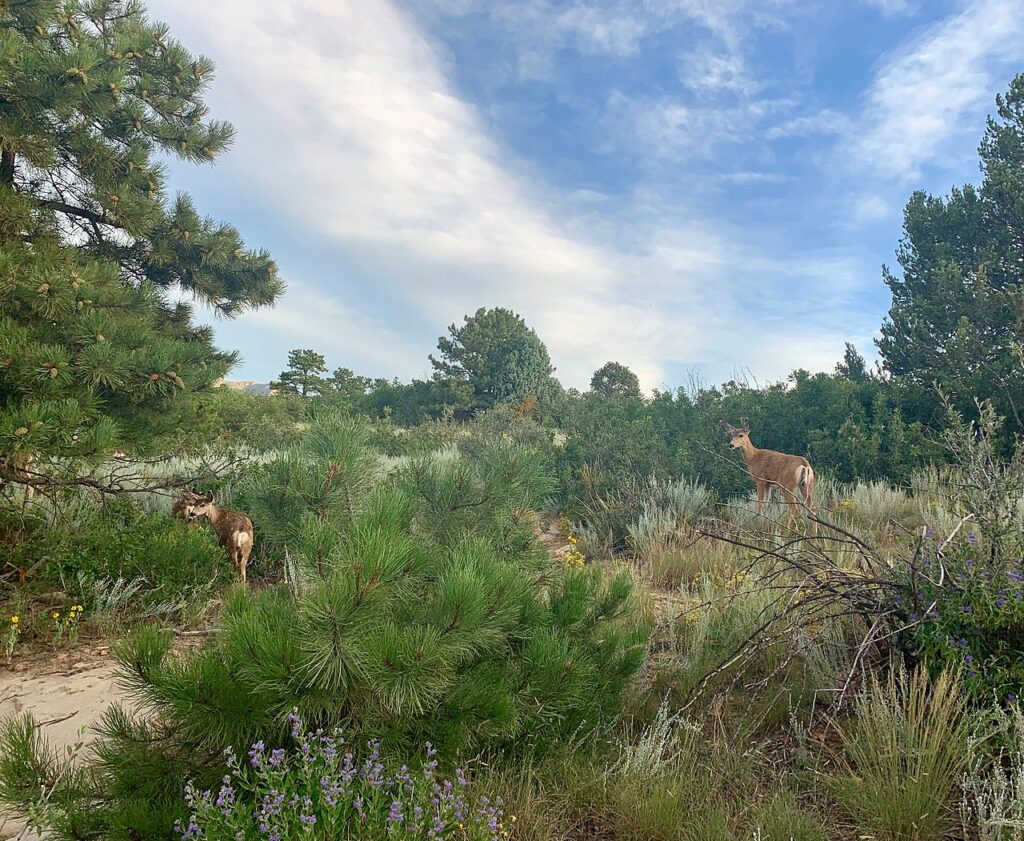
A shorter, easier loop through the pine forest on the south side of the park. This one is shaded, which makes it the smart choice on a hot summer afternoon. It’s also where I see the most wildlife, deer love hanging out in the pines, especially in the early morning.
North Connector Trails
Several spur trails connect the park to neighborhoods and other trail systems to the north. These aren’t scenic highlights, but they’re useful for locals who want to access the park from different directions without driving. I use these when I’m e-biking through, they connect me to the larger west side trail network.
Wildlife
Ute Valley is surprisingly active with wildlife for a park surrounded by subdivisions. Here’s what you’ll actually see, not just what the brochure says:
- Mule deer: the most common. I see them almost every visit, especially early morning and dusk. They’re used to people but still wild. Give them space.
- Prairie dogs: there’s a healthy colony on the east side of the park near the Vindicator Drive trailhead. Kids love watching them. Adults love watching them too, we just pretend we’re not entertained.
- Raptors: red-tailed hawks are almost always circling overhead. I’ve seen Cooper’s hawks hunting through the pines and the occasional great horned owl at dusk.
- Fox: I’ve spotted a red fox maybe a half dozen times over the years, usually in the early morning. They’re quick and they don’t stick around, but it’s always a good day when you see one.
- Rabbits: cottontails are everywhere, especially along the edges where the trail meets the grass.
You’ll also hear coyotes some evenings if you’re out near dusk. They’re around, this is their neighborhood too.
E-Biking at Ute Valley
This matters to me because I e-bike regularly and Ute Valley is part of my home loop. Here’s the deal:
Ute Valley Park is managed by the City of Colorado Springs as open space. The city allows Class 1 e-bikes (pedal-assist only, no throttle, max 20 mph assist) on most multi-use trails. Class 2 and Class 3 e-bikes are generally not allowed on natural surface trails within city open space.
In practice, the main Ute Valley Trail and the wider multi-use paths are fine for a Class 1 e-bike. The narrower singletrack sections, especially the rockier bits along Rattlesnake Ridge, aren’t great for biking anyway, e-bike or not. They’re steep, technical, and better suited for hiking.
My usual approach: I ride my e-bike through Ute Valley on the wider connector trails as part of a longer loop, but when I want to actually explore the park’s best features, the ridge, the rock formations, the ponderosa groves, I’m on foot. That’s the way to experience this place.
One important note: Always yield to hikers and horses on multi-use trails, keep your speed reasonable, and check the current city regulations before riding. Rules can change, and the city has been updating its e-bike policies as more people adopt them.
Parking and Access
Ute Valley has multiple trailheads, which is another thing I love about it, if one lot is busy, you just go to another. Here are the main ones:
- Vindicator Drive Trailhead: the main entrance on the east side. Largest parking lot, easy to find, and where most people start. This is where the prairie dog colony is. On a weekend, this lot can fill up by mid-morning, but “full” here means maybe 30 cars, not the chaos you’ll deal with at Garden of the Gods.
- Centennial Boulevard Trailhead: west side access off Centennial near Rockrimmon. Smaller lot, fewer people, and it drops you right into the ponderosa section. This is my go-to when I’m driving to the park instead of biking.
- Pinon Valley Park Trailhead: north side access. Good if you’re coming from Rockrimmon or the north side neighborhoods. Connects to the north spur trails.
There’s no entrance fee. No reservation. No timed entry. You just show up. Try doing that at some of the more popular spots along the Front Range these days.
Best Time to Visit
I’m biased because I’m out here all the time, but if I had to pick the perfect Ute Valley experience, it’s this: early morning on a weekday. Like, 7 AM on a Wednesday. The light is golden, the air is cool (even in summer at 6,000 feet), and you’ll have the trails essentially to yourself. That’s when you see the deer, that’s when the raptors are hunting, and that’s when the views of Pikes Peak are sharpest before the afternoon haze rolls in.
Seasons:
- Spring (April-May): wildflowers in the grasslands, perfect temperatures, the green hills against the red rock is incredible
- Summer (June-August): go early. By noon it’s hot and exposed on the ridge. The pine groves offer shade but the open sections will cook you
- Fall (September-October): my favorite. The Gambel oak turns gold and the air gets crisp. October hiking in Ute Valley is about as good as it gets
- Winter (November-March): absolutely hikeable. Trails can be icy in spots after a snow, but Colorado Springs gets 300+ days of sunshine so you’ll have plenty of clear winter days. The snow on the rock formations is beautiful
Weekends vs. weekdays: Weekends bring out the neighborhood crowd, families, dog walkers, runners. It’s still not crowded by any objective measure, but if you want solitude, come on a weekday. It’s night and day.
Why I Prefer It Over Garden of the Gods
Look, Garden of the Gods is spectacular. I’m not going to pretend otherwise. Those red rock formations against Pikes Peak, there’s a reason it’s one of the most visited free attractions in the country. I take every out-of-town visitor there.
But it’s not where I go to actually enjoy being outside.
Garden of the Gods gets somewhere around 5 million visitors a year. Five million. The main parking lots fill up by 9 AM on a weekend. There are tour buses, Segway tours, people stopping in the middle of the road for selfies. The trails closest to the parking lots are basically sidewalks. It’s a beautiful place that sometimes feels more like a theme park than a natural area.
Ute Valley? It’s just me and the deer. Maybe a few neighbors walking their dogs. The trail surface is natural, dirt and rock, not pavement. There’s no visitor center, no concession stand, no souvenir shop. It’s just 338 acres of Colorado doing what Colorado does.
The rock formations at Ute Valley aren’t as dramatic as Garden of the Gods, but they’re still impressive. And here’s the thing, you can actually sit on a rock and be alone with your thoughts. You can hear birds instead of car engines. You can walk for an hour and not pass another person. When’s the last time you did that at Garden of the Gods?
If you’re visiting Colorado Springs and you want the postcard shot, go to Garden of the Gods. If you want to know what it actually feels like to live here, come to Ute Valley on a Tuesday morning. That’s the real Colorado Springs.
Getting Here and Other West Side Spots
Ute Valley Park is located between Centennial Boulevard and Vindicator Drive on the west side of Colorado Springs. From I-25, take Garden of the Gods Road west, then head north on Centennial. You’ll see the trailhead signs. From the north side, come down Rockrimmon Boulevard.
While you’re on the west side, you’re close to some other great spots. Garden of the Gods is just a few minutes south. The whole west side is connected by trails, which is why I love it here, you can e-bike between parks without ever getting on a major road. And if you want more hiking trails, there are plenty within a short drive.
Ute Valley isn’t on any “worth seeing” tourist list. It’s not going to show up in your Instagram feed. And honestly? That’s exactly why I love it. Some of the best things about Colorado Springs are the ones the tourists never find.
About the Author: Dominic has lived in Colorado Springs for over 20 years. He spent his career in IT and chose the Springs for its scenery, sunshine, and outdoor lifestyle. He lives on the west side, where he e-bikes, camps, and explores the mountains regularly. His recommendations come from two decades of eating, hiking, and living here, not from a weekend visit.
If you want to get outside without the Garden of the Gods crowds, Ute Valley Park is a local favorite, especially for mountain biking.
Overlooked west-side hike base
Ute Valley is close to Rockrimmon / north-west Springs. Stay west-side if you are stacking this with Garden of the Gods.
Search northwest Colorado Springs hotels
Water and a light layer for the ridges: water bottle on Amazon →
Ute Valley trail kit
More Colorado Springs Guides
- Ute Valley Park in Colorado Springs: A Hidden Gem for Outdoor Enthusiasts
- Garden of the Gods: When to Go, Where to Park, and What the Tourism Sites Won’t Tell You
- Day Trips from Colorado Springs: Cripple Creek, Woodland Park, Royal Gorge, and More
